
Most guides stop at the signature. This one starts there. Below is what the first day, the first month and the first year actually look like for a foreign contract soldier — the routine, the housing, family contact, injuries and what happens next.
Verified: July 2026. Details vary by unit and region. Ask the recruiter which unit you'll be assigned to before signing — that answer changes almost everything below.
What happens on the first day?
You report to your assigned unit and are shown your bunk, the mess hall and the duty office. A uniform is issued on the spot — usually one summer set, one winter set, boots and load-bearing gear. You meet your immediate commander, sign the last of the paperwork and start learning names.
Expect a lot of waiting. The army runs on paperwork and formation times; the first 24 hours feel slow, not dramatic. Bring a small notebook — writing down names, ranks and schedules the first week saves weeks of confusion later.
What does a normal day look like?
The schedule is fixed and predictable. It's the opposite of freelance work.
| Time | Activity |
|---|---|
| 06:00 | Wake-up |
| 06:15 | Morning PT |
| 07:00 | Breakfast |
| 08:00 | Training / duties |
| 13:00 | Lunch |
| 14:00 | Duties or study |
| 18:00 | Dinner |
| 19:00 | Personal time |
| 22:00 | Lights out |
Weekdays are training, maintenance and admin. Weekends are usually free time, with occasional guard duty. Most foreigners describe the first two to four weeks as the hardest and then say the routine stops feeling foreign.
How are foreigners treated by Russian soldiers?
Judgement is by work, not by passport. Foreign soldiers have served in Russian units for years, so you are not a novelty. Four things visibly help:
- Learning Russian faster than expected.
- Being on time, every time.
- Doing your job without complaint.
- Respecting rank in and out of uniform.
Some soldiers will become friends. Most will stay professional acquaintances. A small number will keep their distance. That mix is normal in any military.
Where will you live and what will you eat?
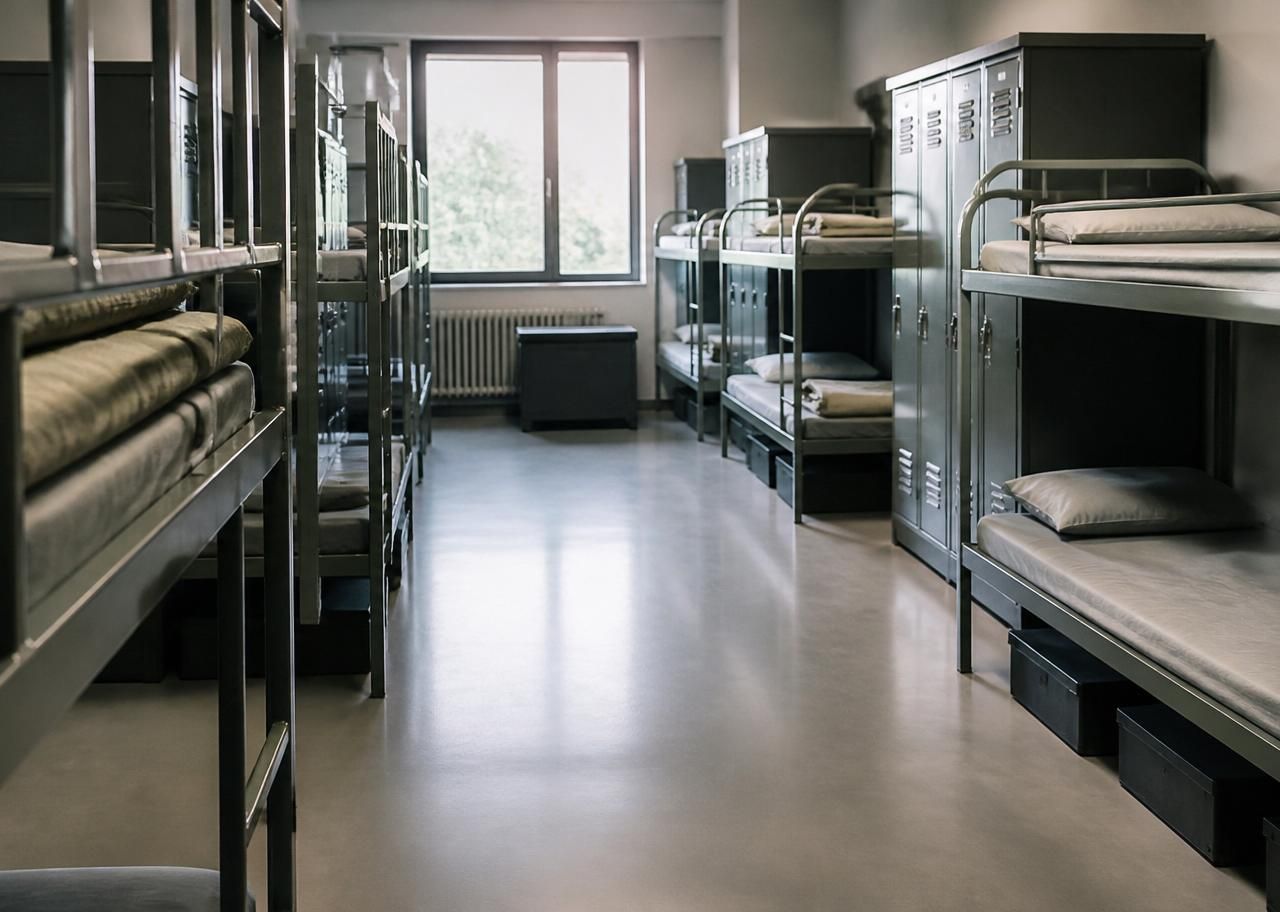
Housing is a shared barracks room, typically two to four bunks. It's basic and clean. Higher rank, family status or specific units can qualify you for a private room or a small apartment; ask on assignment.
Food is three hot meals a day — soup, meat, bread, kasha, tea. It's canteen food, not gourmet, but nobody goes hungry. Uniform items are issued; losing gear comes out of your pay, so track what you receive.
Can you call your family?
Yes. Personal phone use is allowed in most units during evening hours. WhatsApp, Telegram and standard calls all work with a Russian SIM and data plan. Many foreign soldiers set a fixed weekly call with home — a scheduled hour helps far more than daily attempts.
Operational deployments can restrict phone use for security reasons; that's temporary and unit-specific, not a general rule.
What happens if you get injured?
Report every injury immediately. Concealing an injury turns a two-week issue into a career-ending one.
- Treatment starts at the unit medic and moves to a military hospital.
- Care is free.
- Serious injuries route to specialised facilities in larger cities.
- Your contract determines what happens next: recovery, reassignment, medical discharge or a lump-sum payment.
How do promotions and career growth work?
The contract is an entry point, not a ceiling. Performing consistently opens four real paths: promotion in rank (more base pay), specialisation (medic, driver, drone operator, sniper), NCO or officer school if your qualifications hold up, and extending the contract for a longer term. Many foreign soldiers who planned "one contract, then leave" end up extending.
What to weigh honestly
Life is manageable but not comfortable. You trade personal freedom and free time for a structured job that pays well and gives medical, housing and a documented career. If that trade doesn't fit, the first two weeks will tell you clearly. If it does, most of the fears disappear by the end of the first month.
Before you get here — see documents you'll need and the full step-by-step process.