
Verified: July 2026. Decree 690 is in force, but citizenship procedures have been amended several times — confirm current rules before submitting documents.
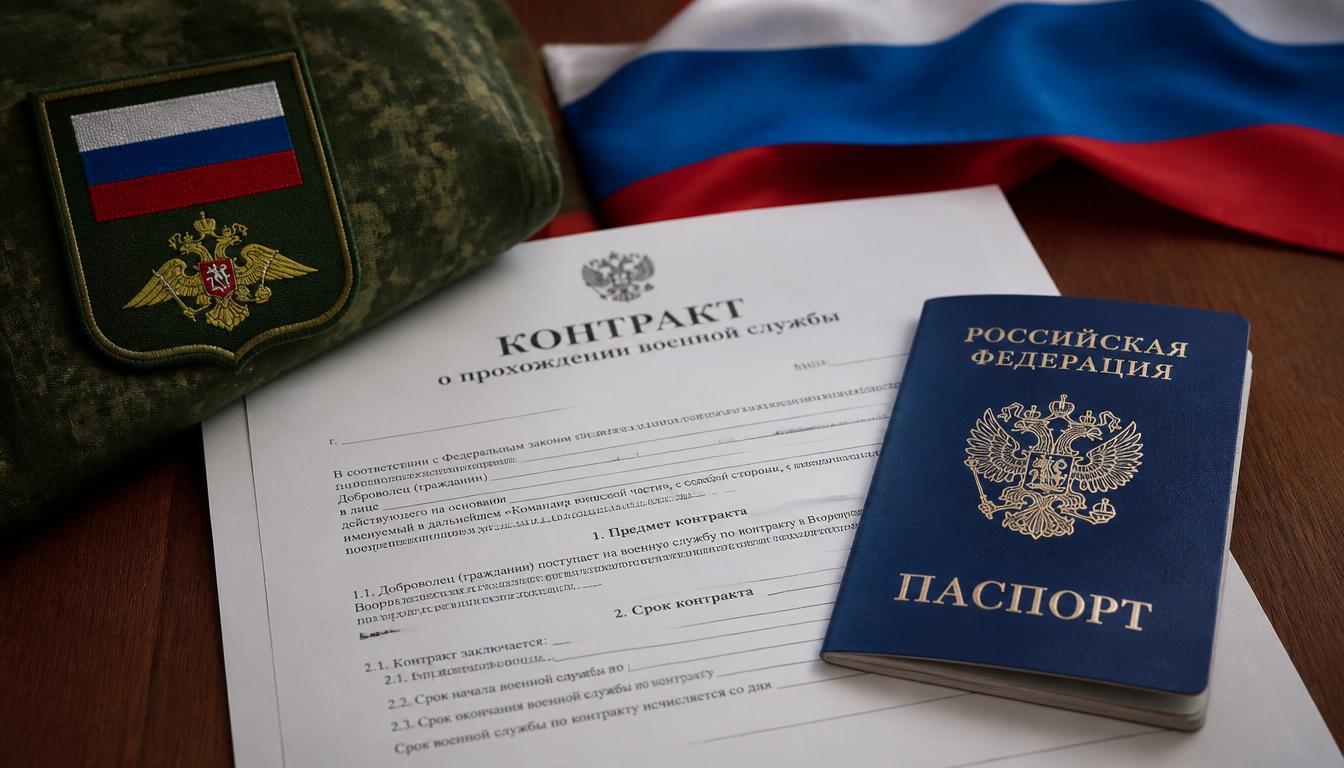
Presidential Decree No. 690 was signed in September 2024. It is the single legal instrument that turns "Russian citizenship through military service" from a slogan into a workable procedure. This guide covers what the decree actually says, who qualifies, what documents you need, and how the timeline runs in practice.
What Decree 690 actually does
The decree rewrites the simplified citizenship track for foreign contract military under Federal Law 62-FZ. In plain terms:
- A foreigner who signs a contract of at least 12 months with the Russian Ministry of Defence can apply for citizenship in a simplified order.
- Spouse, minor children, and parents apply on the same basis, in parallel.
- Standard barriers — residence permit (ВНЖ), five years of residence, Russian language exam, income proof — are waived.
The decree does not create automatic citizenship. Applications still go through the Ministry of Internal Affairs (МВД) and require a background check before the presidential decree granting citizenship is issued.
| Requirement | Standard route | Decree 690 route |
|---|---|---|
| Residence permit | Required | Not required |
| Years of legal residence | 5 years | Not required |
| Russian language exam | Required | Not required |
| Proof of income | Required | Not required |
| Renunciation of original citizenship | Not required | Not required |
| Realistic time to passport | 6–8 years | 4–9 months |
Who qualifies?
All of the following must be true:
- Foreign citizen or stateless person, aged 18–65.
- Signed contract of 12 months or longer with the Ministry of Defence.
- No unspent criminal record for a serious offence, Russian or foreign.
- Identity documents valid and legalisable for use in Russia.
You do not need a residence permit, five years of residence, a language or history exam, proof of income, or to renounce your original citizenship.
Documents needed
- International passport valid for at least 12 more months
- Birth certificate
- Marriage or divorce certificate, if applicable
- Children's birth certificates, if applying for them
- Certificate of no criminal record from your home country
- Military ID or discharge documents, if any
- Medical certificate — issued after arrival at a designated clinic
- Notarised Russian translations of every foreign document
Do the translations in Russia, through a translator known to the local МВД office, unless your home-country translator is on the Russian consulate's approved list. Rejected translations are the top single cause of delay.
Timeline: from contract to passport
| Step | Timing |
|---|---|
| Day 0 — Sign contract at recruitment centre | Day 0 |
| Weeks 1–2 — Medical commission, first pay, unit assignment | Weeks 1–2 |
| Month 1 — Submit citizenship application via unit HR with commander's petition | Month 1 |
| Months 2–4 — МВД reviews application, background check completed | Months 2–4 |
| Months 3–6 — Presidential decree granting citizenship issued | Months 3–6 |
| Months 4–9 — Oath of allegiance, Russian passport issued | Months 4–9 |
Family members usually receive their passports one to two months after the soldier does.
Common reasons applications fail
- Contract shorter than 12 months — does not qualify at all.
- Untranslated or badly translated documents — every foreign paper needs a notarised Russian translation accepted by МВД.
- Unspent criminal record — serious offences abroad also count.
- False information on the application form — small inconsistencies with your foreign records will trigger a rejection.
- Expired identity documents — passport must remain valid past the end of the process.
How Decree 690 fits with existing law
Decree 690 amends the simplified procedure under Federal Law 62-FZ. It does not replace the law and does not remove МВД's authority to run background checks. It changes the eligibility side of the equation, not the review side. If МВД finds a serious record or a documentation issue, the application is refused regardless of the decree.
What could change
The simplified track has been amended more than once since 2020. As of July 2026, Decree 690 is in force. If you qualify today, apply. Waiting for "better terms" carries the opposite risk — the current version is already the best-case, not a floor.
Where to go next
If you are early in the process, read our step-by-step guide to signing an army contract as a foreigner and the full citizenship guide with practical detail. For family paperwork, see bringing your family to Russia after the contract. Country-specific eligibility is on the requirements page.
Decree 690 is what makes the four-to-nine-month timeline possible. Everything after that is paperwork discipline.